How to build a habit that sticks

A habit sticks when it is small enough to do on a bad Tuesday, tied to something you already do, and tracked as a repeat — not as a life overhaul you announced in January.
Most habits die of ambition, not laziness
People search “how to build a habit that sticks” after a month of a perfect plan: gym five days, journal three pages, 10,000 steps, no sugar. The plan was never a habit. It was a project. Projects end when motivation dips. Habits are supposed to survive the dip.
A stickier definition: a small action on a schedule, with a clear cue, that you can still do when you are tired. If it only works on a fresh Monday, it is not a habit yet.
Start with one, and make it embarrassingly small
One habit. Not a stack of twelve. Pick the one that would make the rest easier — sleep window, a daily walk, logging lunch, or opening the workout plan. Then cut it down. “Train for 45 minutes” becomes “put on shoes and do the first set.” “Journal every night” becomes “one sentence.” You can grow the real version after the tiny one is automatic.
If you are mixing workouts, emails, and “be healthier” on the same list, stop. Repeating actions belong in a habit tracker. One-off tasks belong on a to-do list. The split is explained in habit tracker vs to-do list.
Cue, action, evidence
- Cue. Same place, same time, or right after something you already do. Mornings work if wake-up is stable — see how to stop hitting snooze. Evenings work if the phone is not in the bed.
- Action. The tiny version, done even on a bad day. Missing the “full” version still counts if the tiny version happened.
- Evidence. A checkmark, a streak, a logged session. The point is to see the repeat, not to collect a perfect score.
Environment beats pep talks. Lay out the shoes. Put the journal on the pillow. Block the apps that steal the first 20 minutes. For attention as a scheduled block, use a deep work routine instead of hoping you will “focus more.”
Streaks help until they become a trap
A streak is useful because it makes skipping visible. It is harmful when one miss makes you quit the identity (“I blew it, start in January”). The rule that works: never miss twice. Travel, illness, and late meetings happen. Resume the tiny version the next day. Do not redesign the whole system as punishment.
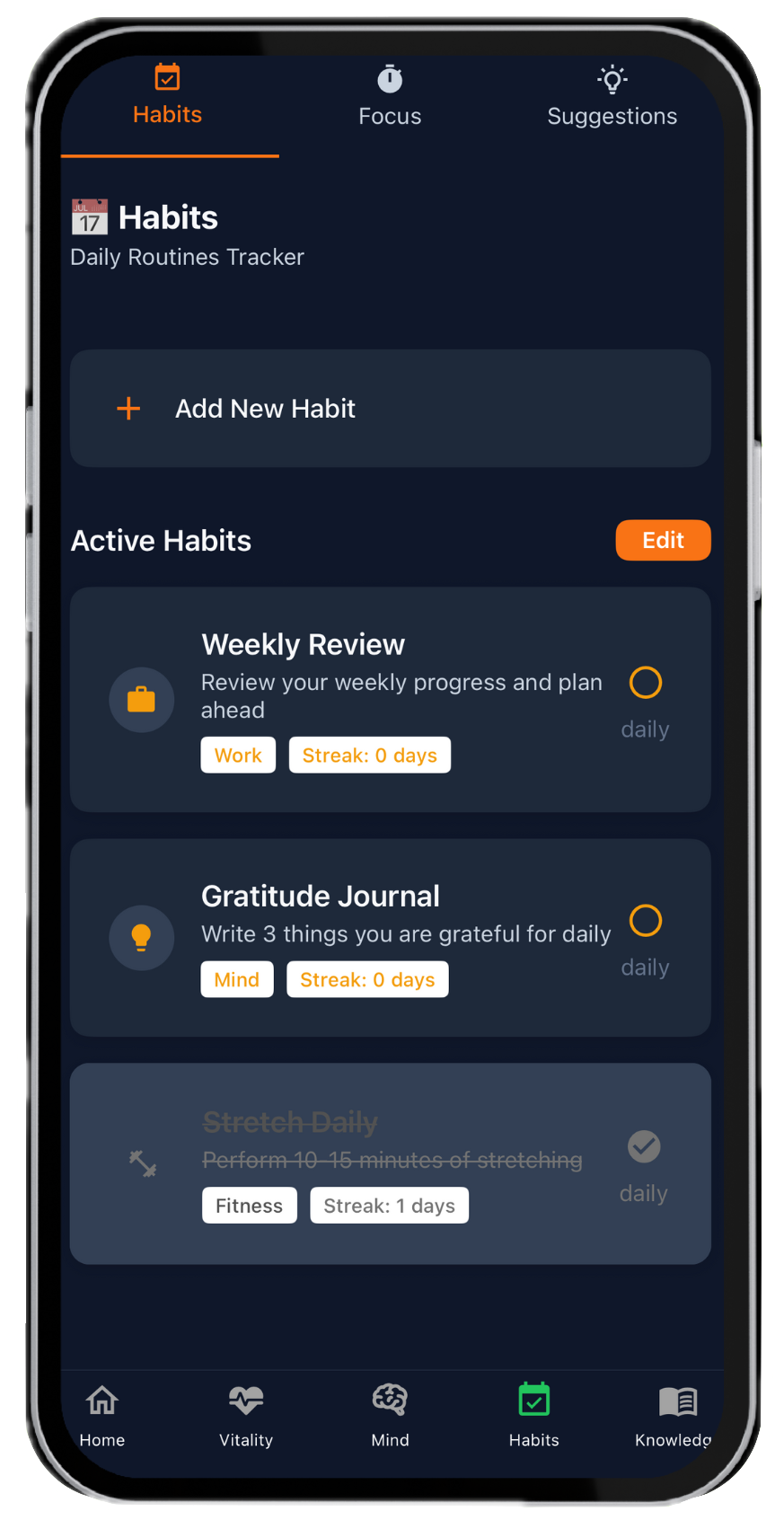
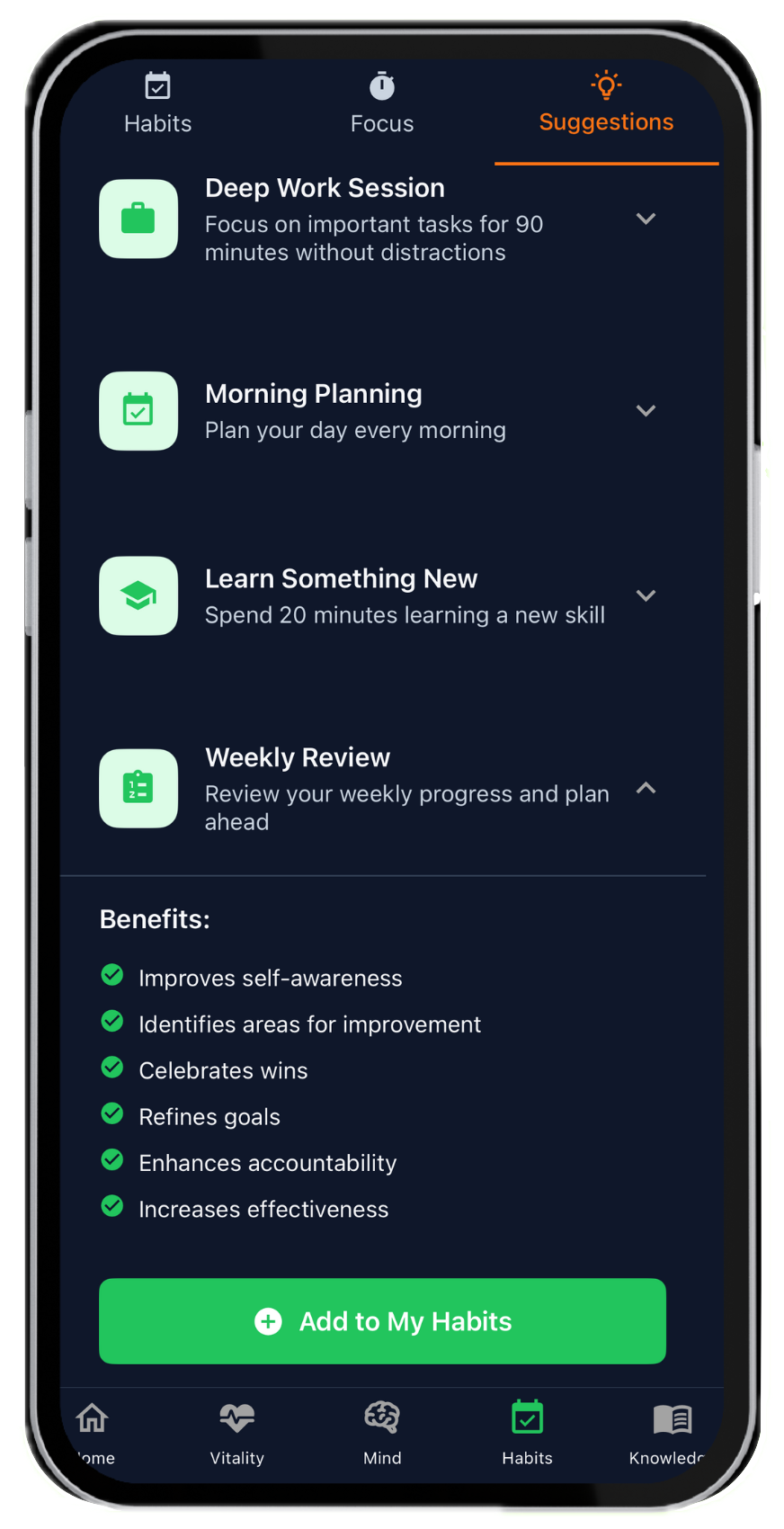
LifeMaxing tracks habits with reminders, categories, and streaks, then counts those wins toward the same progress as workouts, sleep, and focus. You can start with a few habits on the free plan. Suggestions help when a blank list is the problem. Grow into a morning routine only after the first habit is boring in a good way.
When to add the second habit
After about two weeks of showing up — not two weeks of a perfect app screenshot — add one more, or lengthen the first. Training three days a week can become a habit once “open the plan and do the first lift” is already true. Sleep and food follow the same logic: a window and a default meal beat a 14-step protocol.
Put the guide into a daily system
LifeMaxing tracks habits, workouts, meals, sleep, and focus in one app. Start free.
Get the app