Habit tracker vs to-do list: which should you use?

A habit tracker and a to-do list solve different jobs. Using one tool for both is why your streaks break and your list never reaches zero.
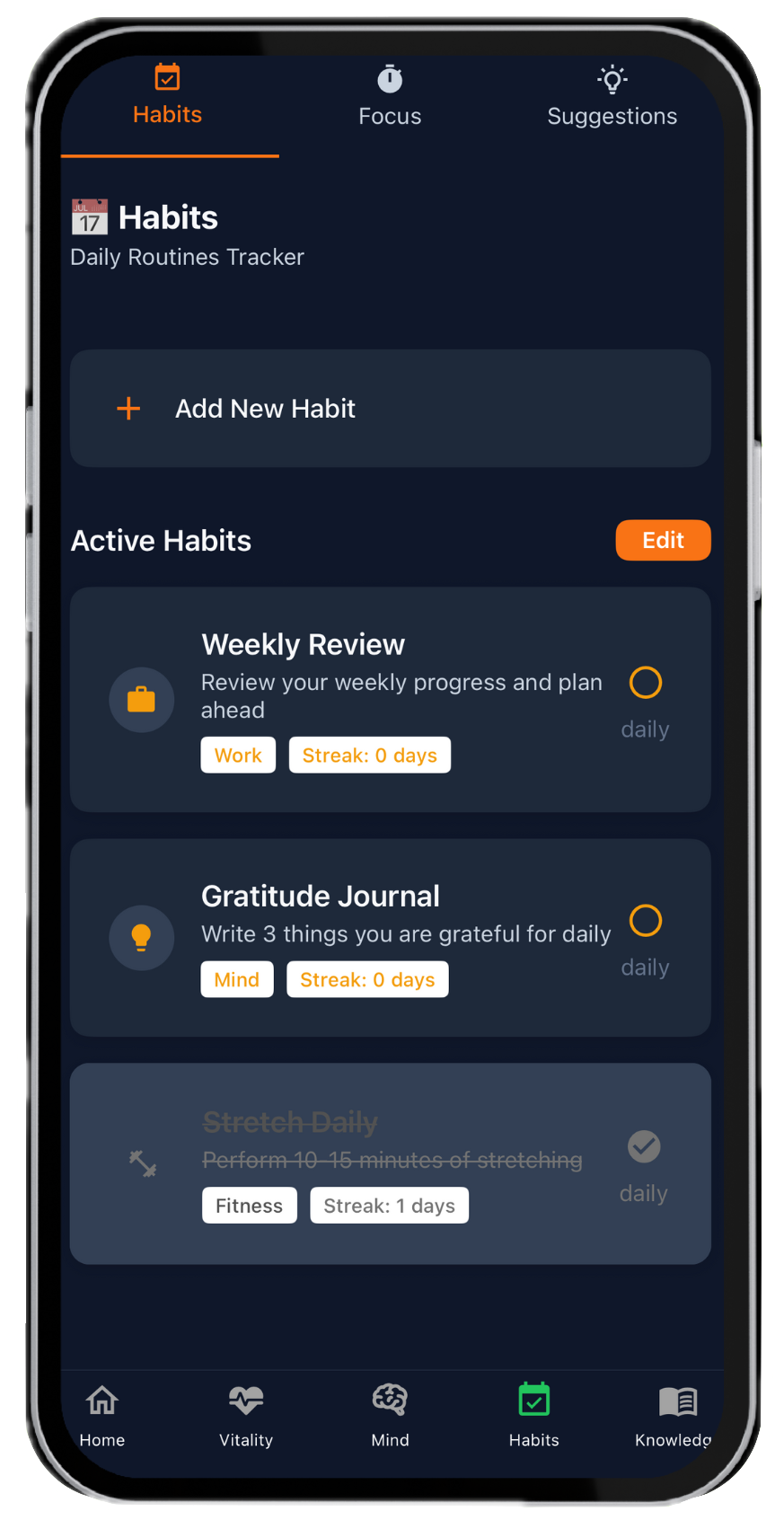
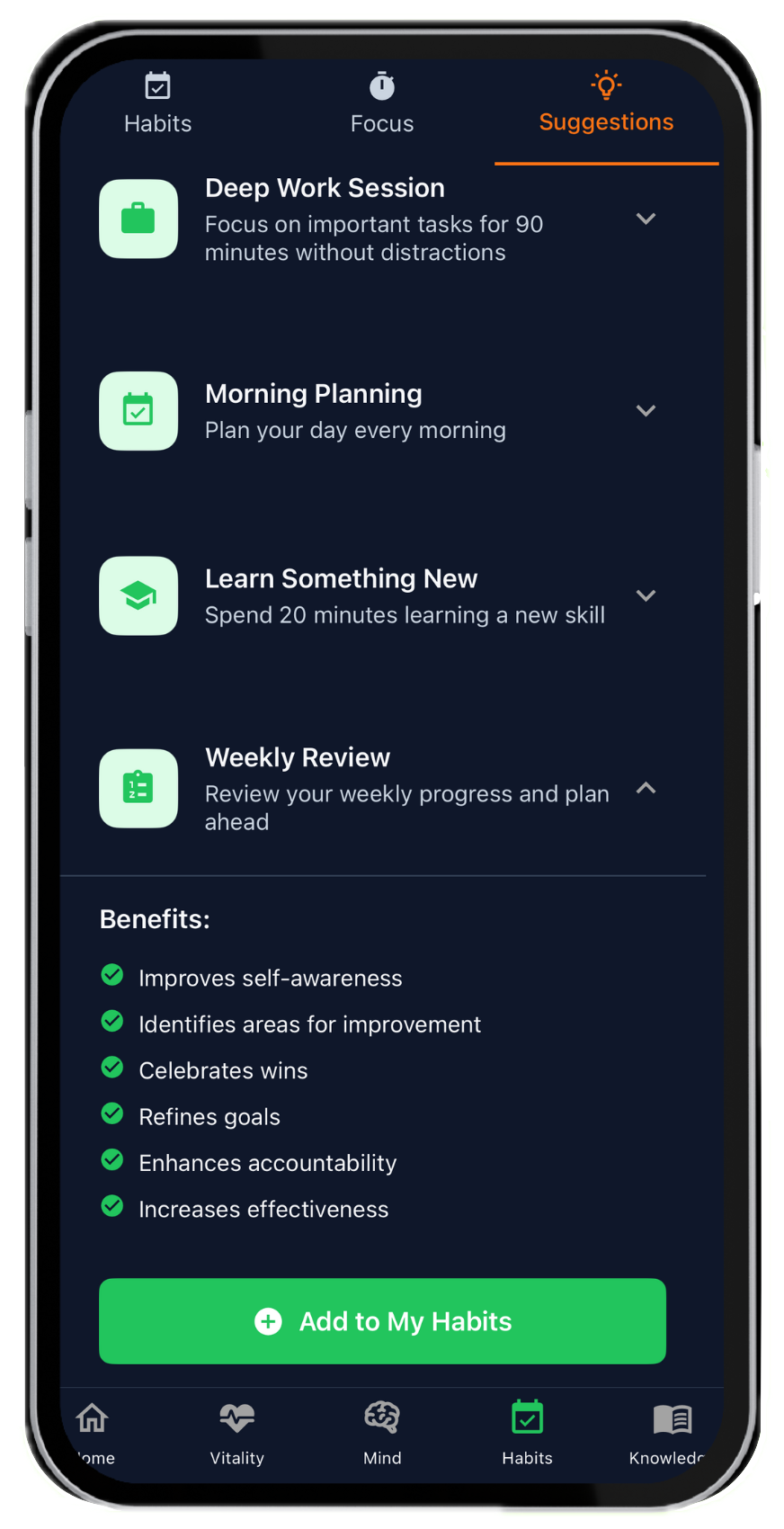
They are not the same list with prettier checkboxes
A to-do is a unit of work with an end: send the invoice, book the flight, finish the slide deck. When it is done, it should disappear. A habit is a repeating behavior with no finish line: sleep by 11, lift three days a week, write 200 words, walk after lunch. Completing it today does not retire it.
People search “habit tracker vs to-do list” after a month of dumping workouts, emails, and “be healthier” onto the same app. The list grows. The streak feels fake. Motivation drops because the tool cannot tell a win from leftover chores.
What a habit tracker is for
Use a habit tracker for actions you want to become default. Good candidates are small, binary, and frequent:
- Morning movement, even 10 minutes
- Protein at breakfast
- A wind-down before bed
- One focus block on workdays
- Logging the workout you already planned
Streaks, reminders, and categories exist to keep the identity (“I train on schedule”) visible. They are a poor fit for a unique project with 14 steps.
What a to-do list is for
Use a to-do list for work that ends. Errands, one-off admin, project tasks, “call the clinic.” Those items should complete and leave. If you put them in a habit app, you either never check them off (they are not daily) or you check them off and they haunt you tomorrow as a missed habit.
When a to-do should become a habit
If you have written “workout” on a to-do list every weekday for a month, it is not a task. It is a habit wearing a to-do costume. Move it to a tracker with a schedule (for example three days a week), and keep “buy lifting shoes” as a task. The same split applies to meals: “follow the diet plan” is a habit; “order the grocery delivery” is a to-do.
Why mixing them quietly wrecks both
Habit apps punish you for skipping. To-do apps punish you for leftover items. Combined, a normal Tuesday looks like failure: you trained and slept, but the list still has “email landlord.” Or you cleared the list and skipped the walk, so the streak dies. Separate tools — or one app that treats habits as habits — keep the score honest.
LifeMaxing is a habit tracker with workouts, meals, sleep, and focus in the same system. It is not trying to replace your work inbox. Put repeating life systems here. Leave project tasks in whatever list you already use for work.
A simple split you can use today
- Habit: repeats on a cadence, builds identity, belongs in a streak.
- To-do: has a done state, belongs in an inbox you can empty.
- Plan: a workout or diet plan is a schedule, not a dump of tasks. Follow it, then log it.
If mornings are where the mix-up happens, start with how to build a morning routine and track only the repeating pieces.
Put the guide into a daily system
LifeMaxing tracks habits, workouts, meals, sleep, and focus in one app. Start free.
Get the app