How to build a morning routine that actually sticks

Most morning routines fail because they are copied from someone with a different job, kids, and bedtime. Build a short stack you can repeat on a Tuesday, then grow it.
Why morning routines collapse
Search “how to build a morning routine” and you will get a 90-minute sequence: journal, cold plunge, 12-minute gratitude, 40-minute workout, green juice, inbox zero. That is a lifestyle photoshoot, not a weekday. The routine dies in week two because it was never designed around sleep, commute, or kids.
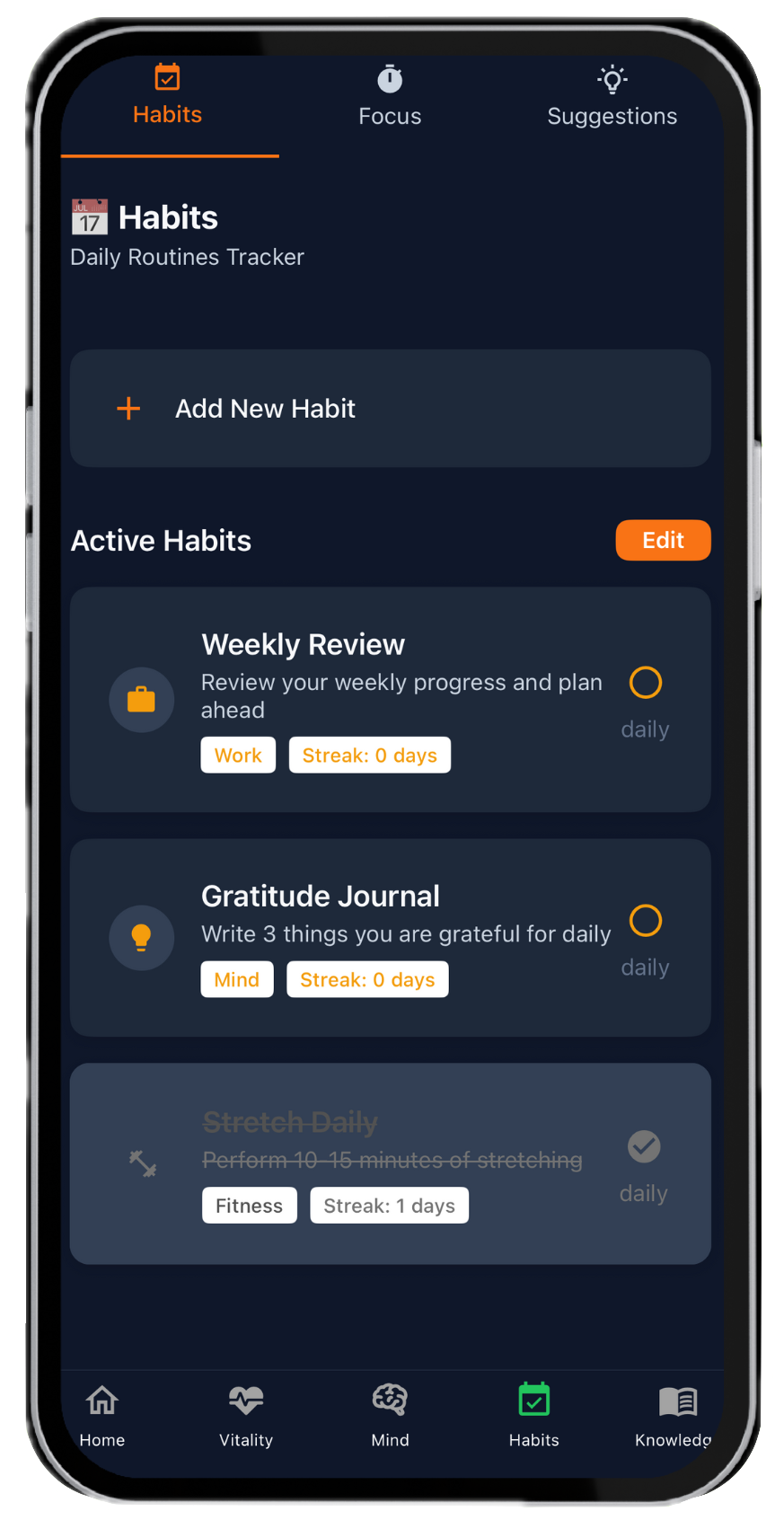
A routine that sticks is short, ordered, and tracked as habits — repeating actions — not as a daily to-do list you rewrite every night. If you need the difference spelled out, read habit tracker vs to-do list.
Rule one: the night before is the morning
You cannot out-routine a 1 a.m. bedtime. Pick a sleep window you can keep five nights a week. Dim screens, park the phone, and treat wind-down as part of the routine, not a nice extra. A sleep tracker helps because it shows whether the morning plan is even possible.
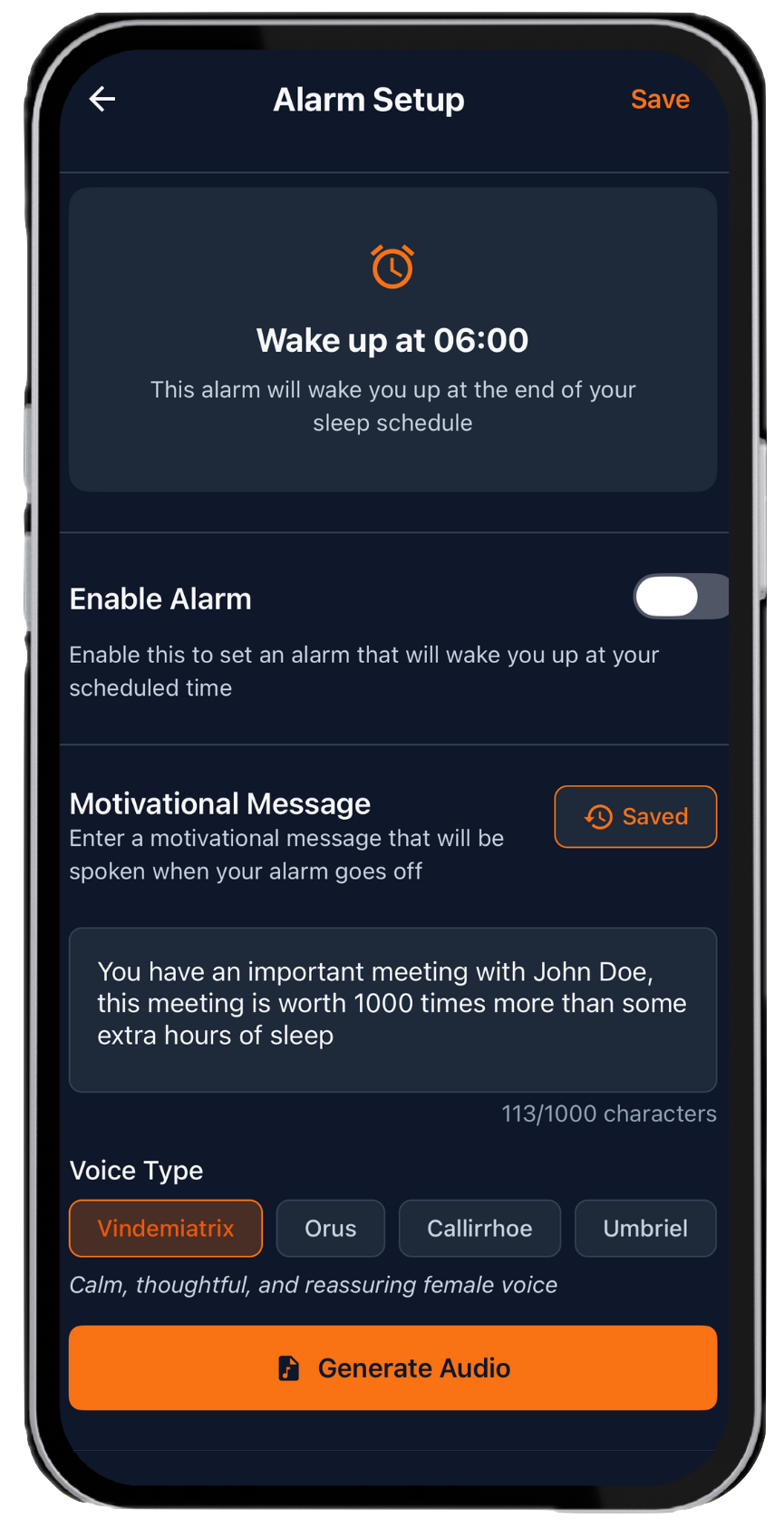
Set the alarm for a time you will actually honor on Wednesday. One wake time beats a “weekend catch-up” that wrecks Monday. Put the phone across the room so snooze is work.
A 30–45 minute stack that survives weekdays
- Wake once. Light on, feet on the floor, alarm off. No second sleep.
- Two minutes of orientation. Water, open a blind, one sentence for the day. That is enough intention. You do not need a five-page journal to start.
- Ten minutes of movement. A walk, mobility, or a short circuit. Save the long gym session for the training plan, not for 6 a.m. heroics on day one.
- Breakfast from a default. Same protein-heavy meal or the breakfast on your diet plan. Decision fatigue is how routines leak.
- One keystone habit. Make the bed, pack a lunch, or start a focus session if work begins early. One, not twelve.
If you only have 20 minutes, keep wake, water, and movement. Cut the rest without guilt. Consistency beats completeness.
Track it as habits, not as a checklist novel
Put the repeating pieces in a habit tracker: sleep window, wake on time, morning movement, breakfast logged. Leave one-off tasks (“email dentist,” “buy shoes”) on a to-do list. When those two tools merge, every morning looks like failure even when you did the routine.
LifeMaxing is built for that split: habits, sleep, meals, and focus sit in one daily system, and they count toward the same progress. You can start free and add pieces when the short stack is already automatic.
Grow the routine only after two weeks
After 14 days of the short version, add one block: a longer workout on training days, a journal prompt, or a 25-minute deep-work block. Never add three at once. If a travel week breaks the streak, restart the short stack — do not redesign the whole morning.
Put the guide into a daily system
LifeMaxing tracks habits, workouts, meals, sleep, and focus in one app. Start free.
Get the app