Workout and diet plan for beginners

You do not need a 12-week overhaul. You need a plan you can repeat: three training days, food in a range, and sleep that lets both work.
This is general fitness education, not a prescription. Get medical clearance if you are new to exercise, returning from injury, pregnant, or managing a condition. Skip anything that hurts in a sharp or joint-specific way.
Start smaller than your motivation
A beginner workout and diet plan fails when it tries to be a bodybuilder split, a marathon, and a 1,400-calorie cut at once. Your job for the first month is showing up: three sessions, protein most days, steps on rest days, sleep that is not optional.
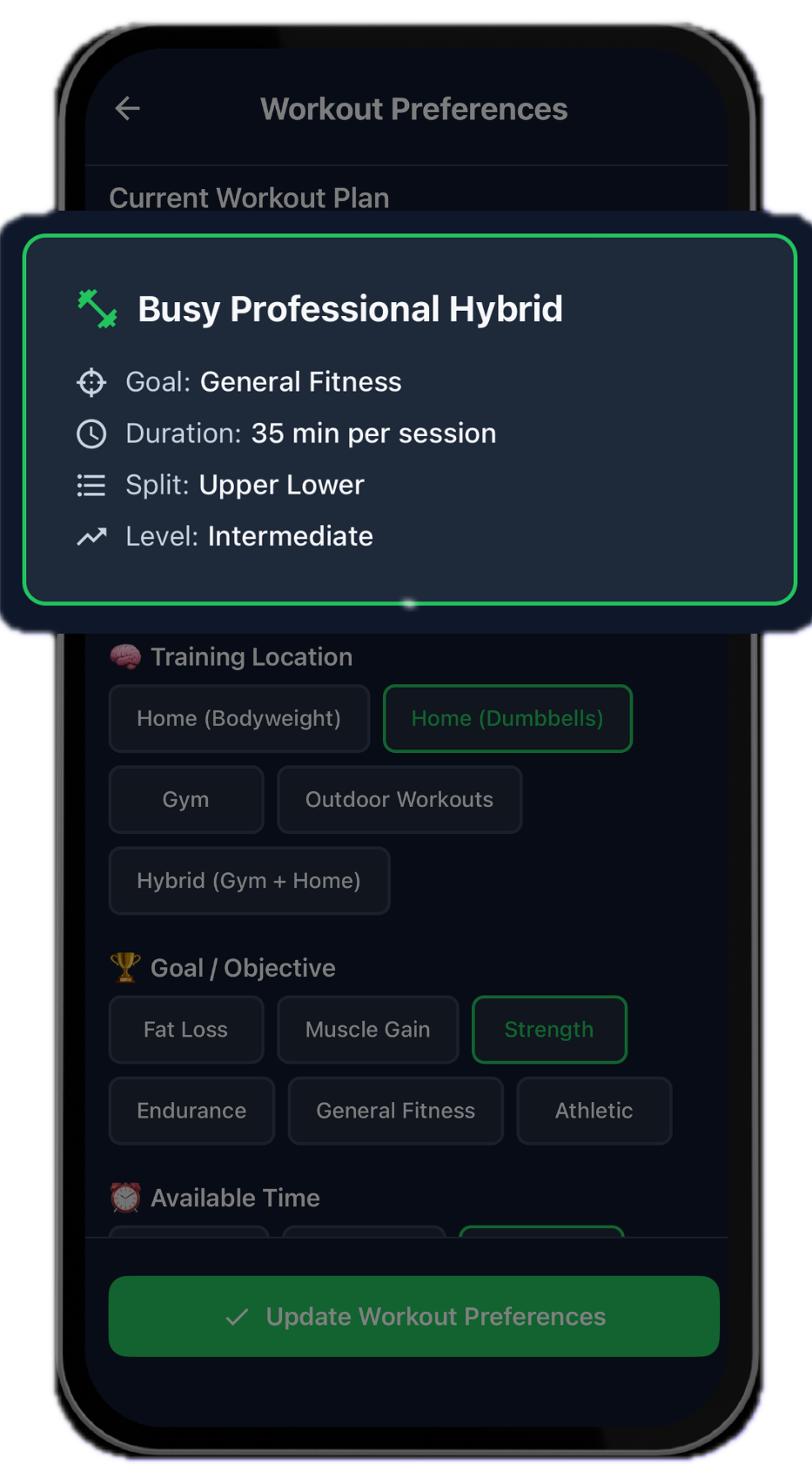
If you want the app to generate the details from your goals, that is what LifeMaxing workout and diet plans are for. Use this page as the logic behind the plan, not as a reason to collect five more PDFs.
The training week
Three full-body days (for example Monday, Wednesday, Friday) beat a six-day “bro split” you will skip. Each session, cover the basic patterns:
- Squat or sit-to-stand: goblet squat, leg press, or chair squats
- Hinge: Romanian deadlift with light weight, hip hinge to a wall, or kettlebell deadlift
- Push: push-ups on a bench or wall, dumbbell press
- Pull: rows with a band or dumbbell
- Carry or walk: a farmer carry or a brisk 10-minute walk to finish
Two or three sets of 6–12 reps is enough. Leave one or two reps in reserve. Add a little load or a harder variation when the last set feels too easy for two weeks. Rest days are for walking, not for “making up” missed workouts with an extra crushing session.
The diet half — a range, not a crash
Pick a calorie range that is slightly below maintenance if fat loss is the goal, or at maintenance if you are still learning to train. Extreme cuts plus new lifting is how energy and sleep fall apart. Anchor protein at each meal (eggs, yogurt, chicken, fish, tofu, beans). Keep a default breakfast and lunch so weekdays do not become a negotiation.
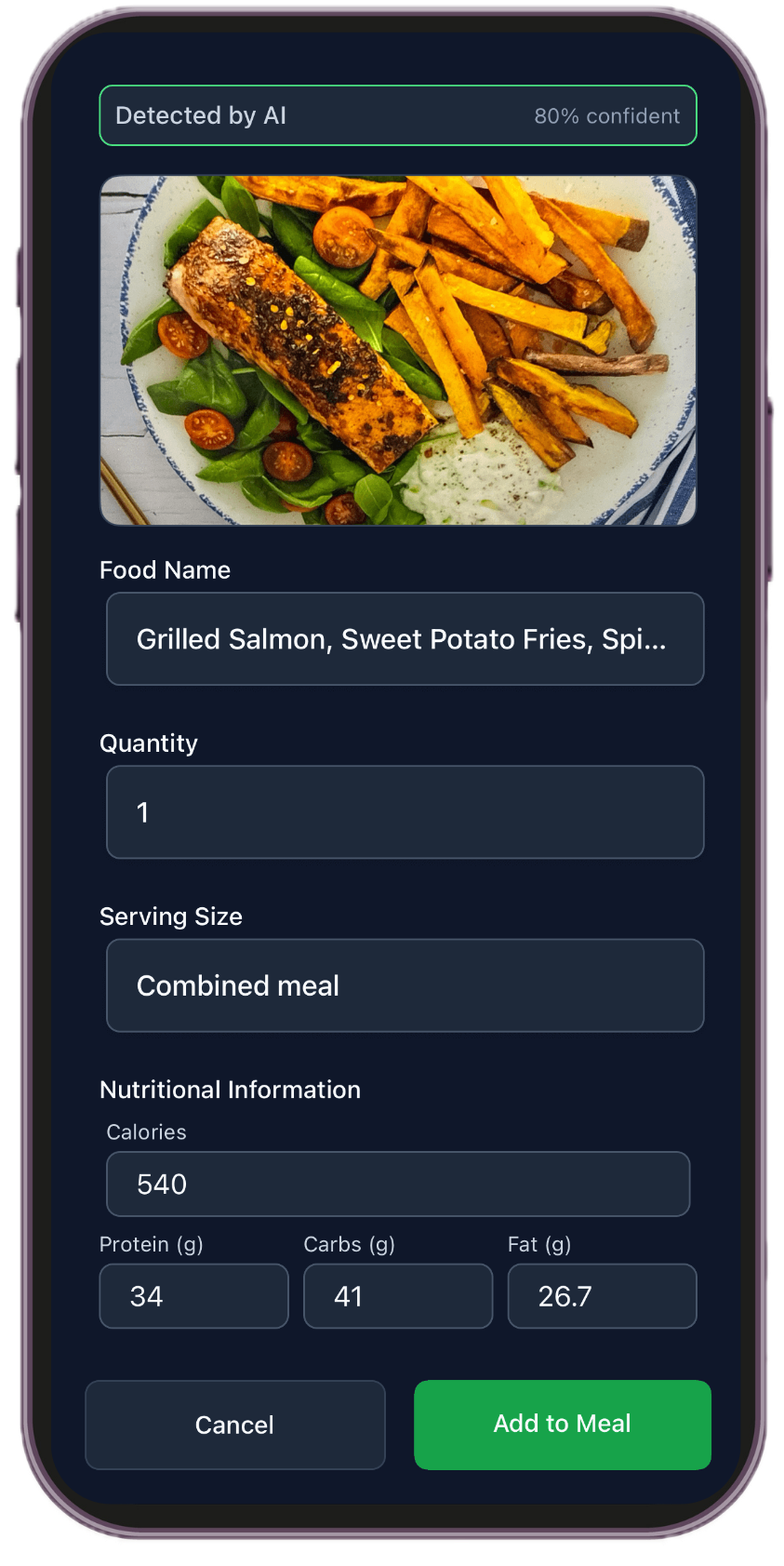
Log meals so the plan is real. Photo logging is fine for mixed plates if you shoot them well — see how to track calories from photos. Use barcode or type-in for packaged food. The calorie tracker is the log; the diet plan is the target.
Recovery is part of the plan
Beginners often train harder than they sleep. Guard a bedtime. If mornings are chaos, fix the wake-up with a short morning routine instead of adding a 5 a.m. workout you will resent. Track the repeating pieces — train, protein, sleep — in a habit tracker, and leave one-off errands on a to-do list.
How to know it is working
After four weeks, you should mostly have done the sessions, not perfected them. Strength on the main lifts should feel a bit more stable. Clothes or a weekly weigh-in (same conditions) can move slowly. If you missed more than half the workouts, the plan was too big — drop to two days and keep walking, then build back.
LifeMaxing keeps training, meals, habits, and sleep in your progress so the pieces stop living in separate apps. Start free, follow a simple plan, and add AI-personalized programming later with Pro at $4.99 a month if you want more.
Put the guide into a daily system
LifeMaxing tracks habits, workouts, meals, sleep, and focus in one app. Start free.
Get the app