Same window tonight. Same wake-up tomorrow.
Sleep apps track a night. LifeMaxing runs a schedule: wind-down, a mission alarm, and a morning that starts when you actually get up.
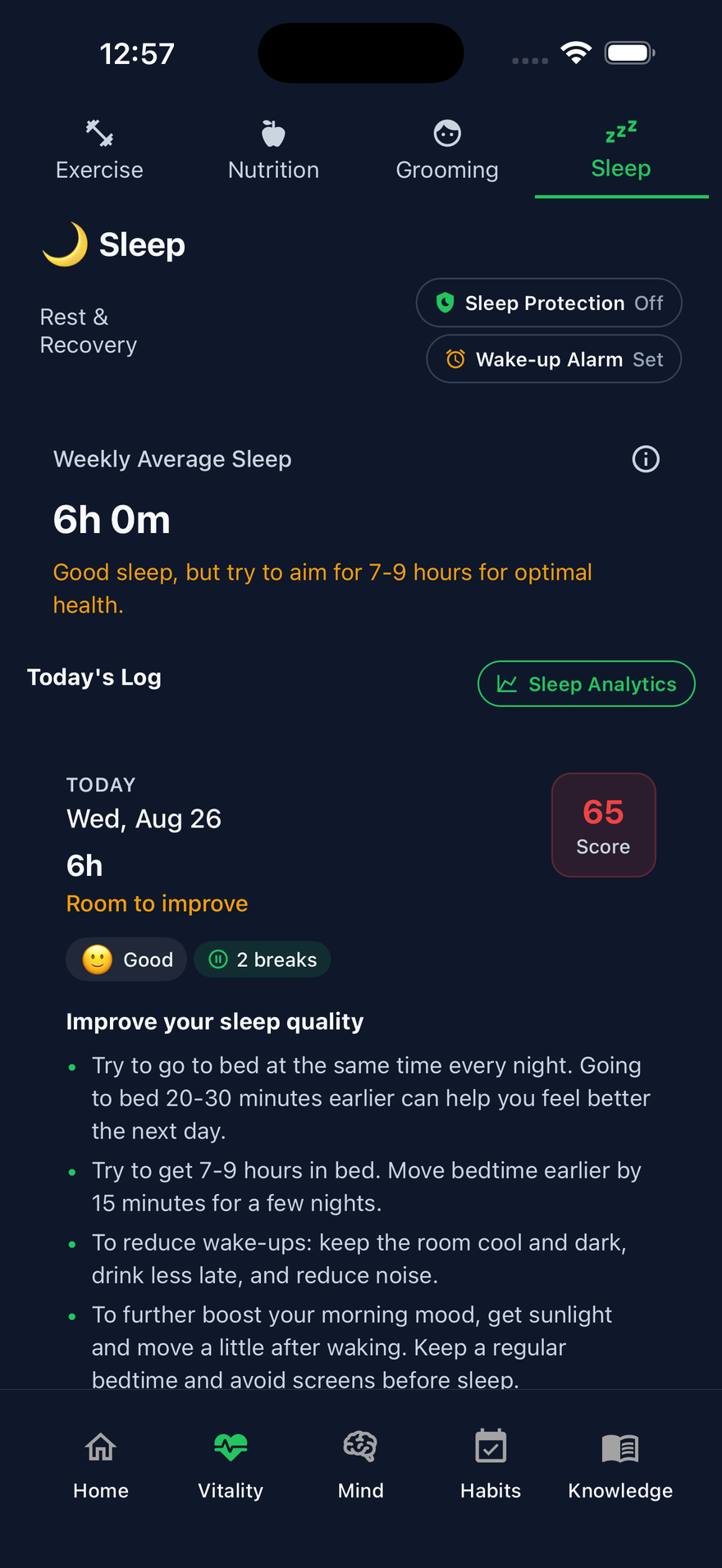
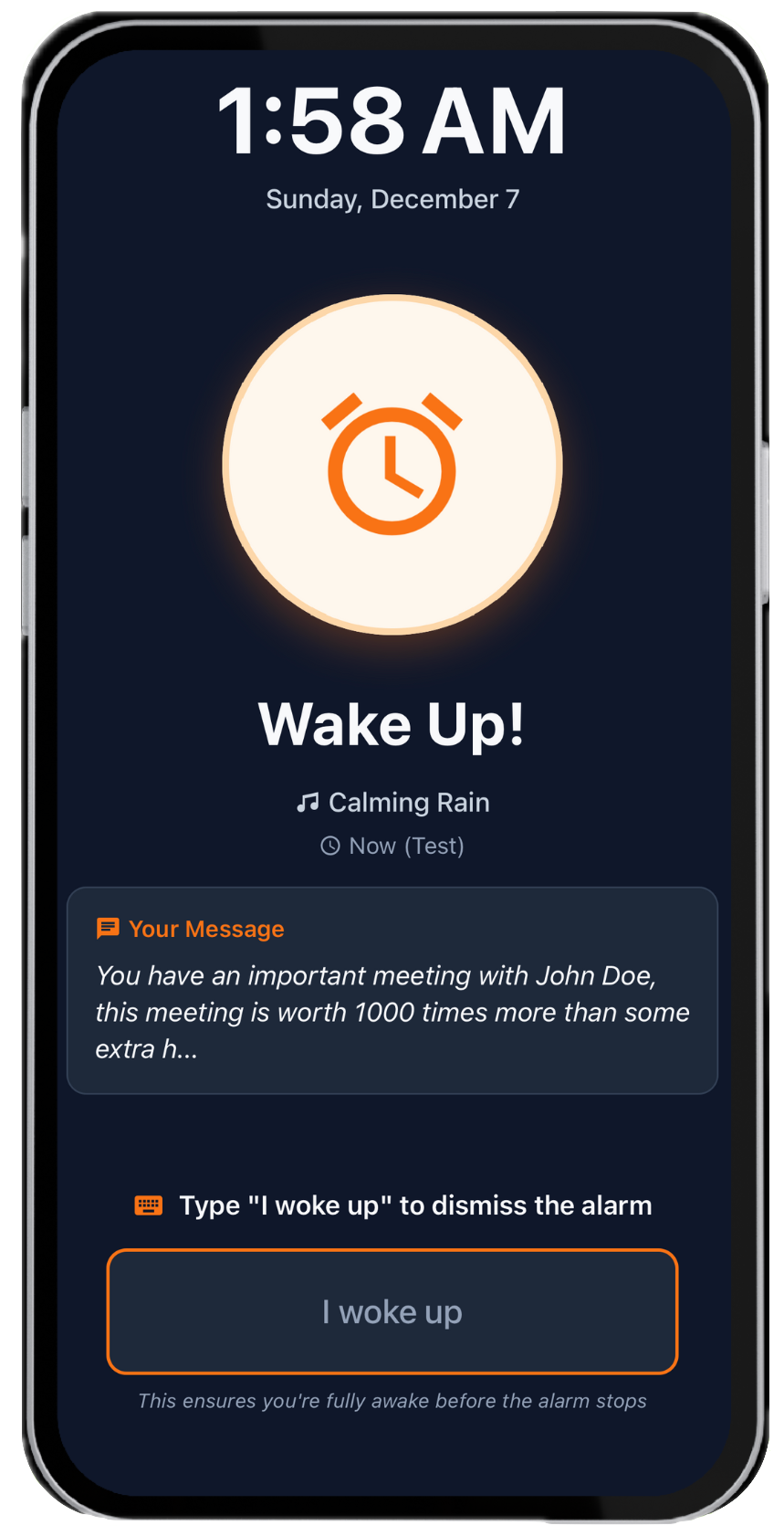
Consistency is the feature, not a score
A wearable will tell you the night was short. It will not protect wind-down, stop the snooze loop, or hand you today’s habits when you finally stand up. The schedule is the product.
LifeMaxing keeps bedtime and wake time in the same system as sleep sounds, a mission-style alarm, and the morning that should follow — so a good night is a week, not a screenshot.
What you run in the app
- Sleep tracking with a schedule and a score next to training
- Wind-down and sleep sounds so bedtime is a step, not a hope
- A mission-style alarm — phrase, math, or walk-to-dismiss
- Habits for lights-down and the same wake window
- Optional meditation or journaling when the mind will not shut off
A simple sleep loop
- Pick a window you can keep on weekdays. Protect it.
- Start wind-down on time. Sounds on. Phone out of the bed.
- Dismiss the alarm for real. Then one morning habit — water, board, or a walk
- Read how to get better sleep and how to stop hitting snooze
Mornings vs the schedule
A morning routine is what happens after you get up. This page is the night that makes that possible. Alarmy wins if you only need a brutal alarm. LifeMaxing wins if the alarm should start a day. Compare LifeMaxing vs Alarmy.
Start free on iPhone and Android
No credit card. LifeMaxing Pro is $4.99/month for advanced AI plans.
Get the app