Workout splits explained: which schedule fits your week

A workout split is just how you divide the week — not a personality test. Pick the schedule you can actually show up to, then follow a plan that matches it.
This is general training education, not a prescription. Get clearance if you are new, injured, or managing a condition. Stop movements that cause sharp joint pain.
What a workout split means
A workout split is how you spread muscle groups and movements across the week. Search “workout splits” and you will see bro splits, push/pull/legs, upper/lower, and full body — each arguing it is the only way. The honest answer: the best split is the one you can repeat for months.
Frequency, recovery, and your calendar matter more than the label. LifeMaxing builds workout plans from your goals and lets you log sessions next to your diet plan and habits so training is not orphaned in a gym-only app.
Full body (2–3 days)
Best for: beginners, busy schedules, people returning after a break.
Each session hits squat/hinge, push, and pull. Example: Mon/Wed/Fri or Mon/Thu. You train each pattern multiple times per week with moderate volume per day. That is why beginner plans often start here — skill and consistency beat specialization early.
Tradeoff: sessions can run long if you add too many exercises. Keep the list short.
Upper / lower (4 days)
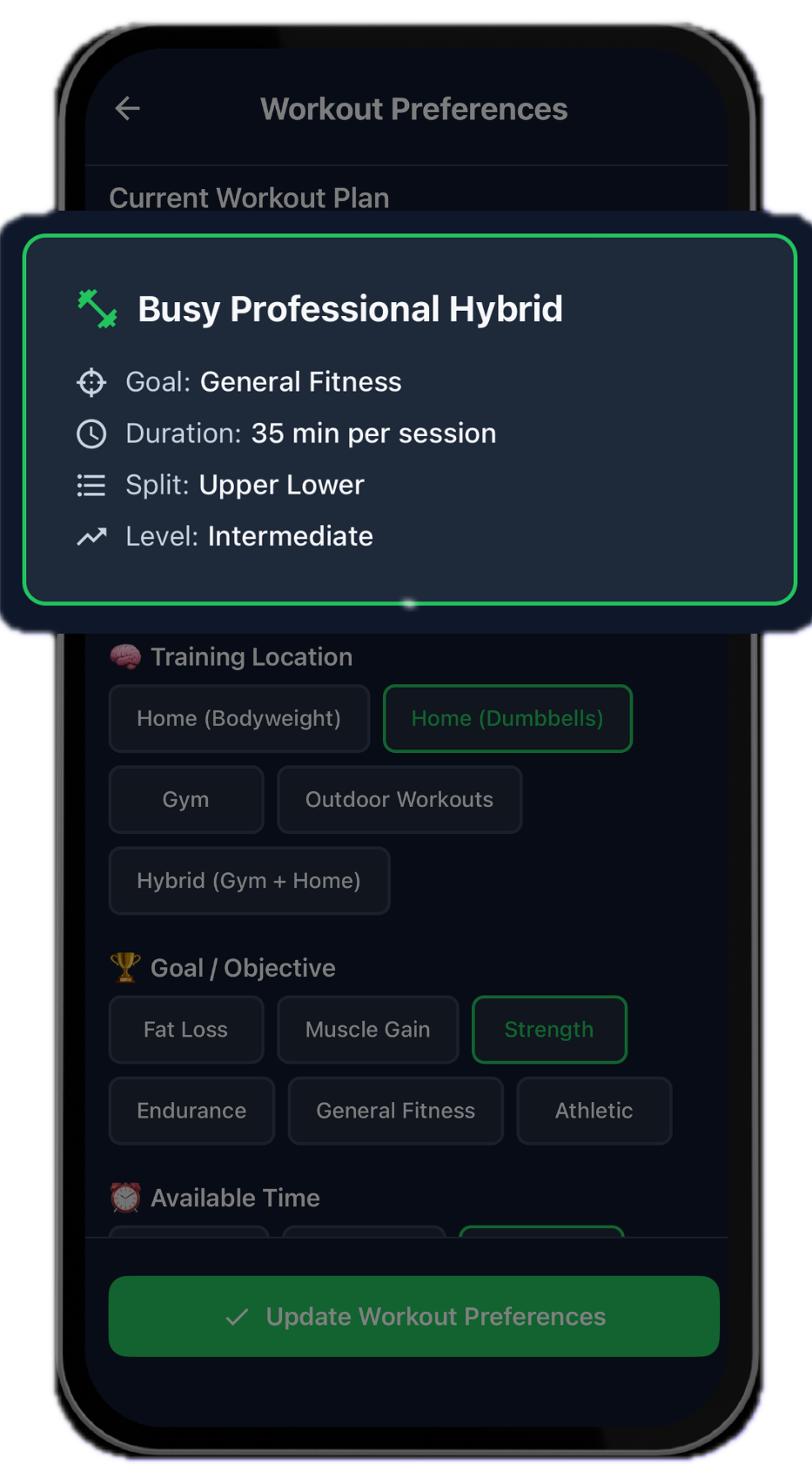
Best for: intermediate lifters who can train four days and want more volume per muscle group.
Upper Monday, lower Tuesday, rest or light work Wednesday, upper Thursday, lower Friday. Each half gets hit twice in six days. Good balance of frequency and focus.
Tradeoff: misses a day and the week feels lopsided. Have a fallback full-body session if life interrupts.
Push / pull / legs (3–6 days)
Best for: people who like structure and can train at least three days — often six for a “PPLPPL” week.
- Push: chest, shoulders, triceps
- Pull: back, biceps
- Legs: quads, hamstrings, glutes, calves
Running the cycle twice per week is popular. Volume per muscle is high; recovery and sleep need to keep up — see how to get better sleep.
Tradeoff: easy to overtrain legs or push if you chase soreness. Log sets and add load slowly.
Bro split (one muscle per day)
Best for: experienced lifters who enjoy high volume on one area and train five to six days.
Classic “chest Monday, back Tuesday…” Each muscle is trained once per week with a lot of exercises. It can work if total weekly volume and effort are high enough.
Tradeoff: lower frequency per lift. Beginners usually progress faster on full body or upper/lower. If you only train three days, bro splits are a poor fit.
How to choose
- Count real training days. Not aspirational days — the ones you kept last month.
- Match recovery. Hard leg day plus bad sleep is a rest day problem, not a “push harder” problem.
- Align food with the split. More training days often mean more calories and protein. Plan the week with meal planning so the gym and kitchen agree.
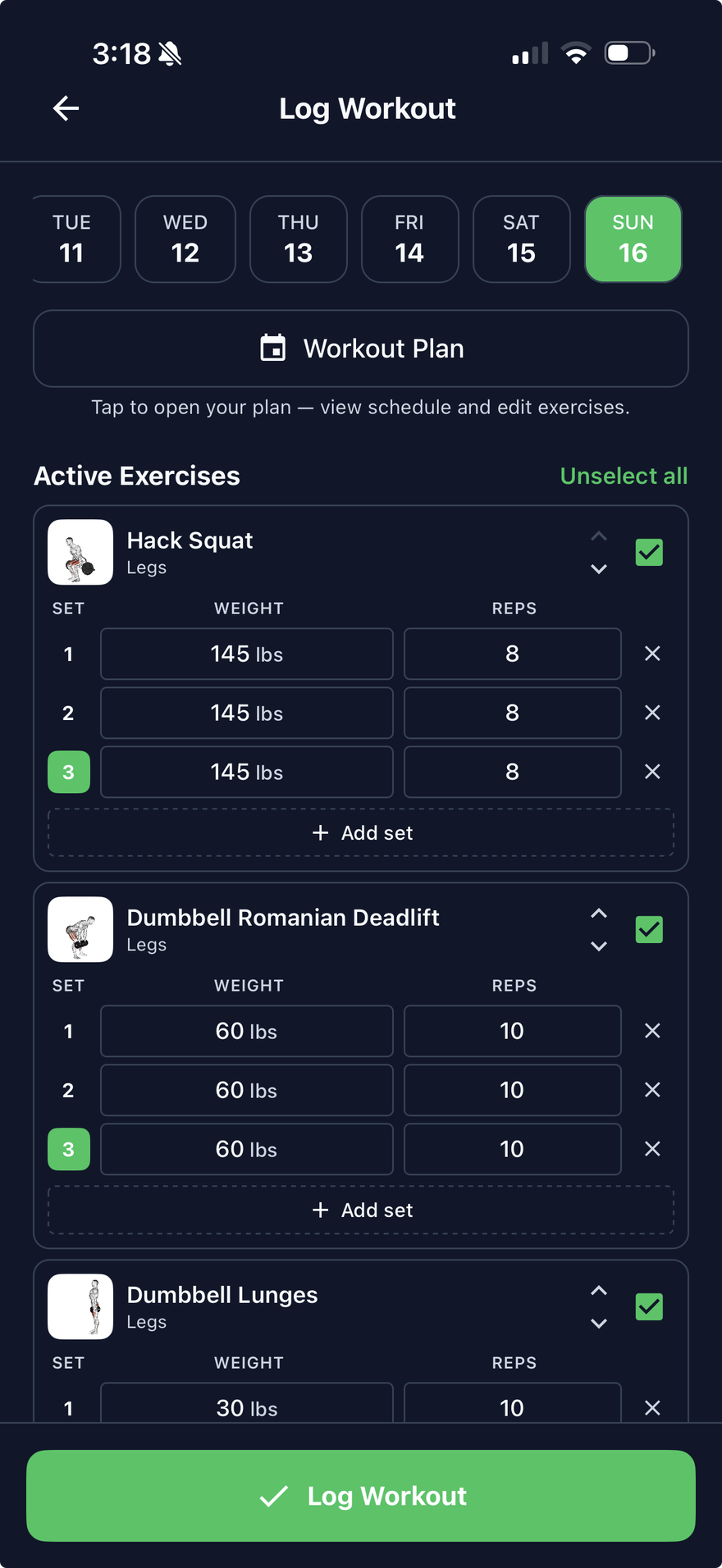
- Follow a plan and log it. Split debates are endless; logged progress is not. Compare apps in LifeMaxing vs Fitbod if you are choosing where to log.
Put the guide into a daily system
LifeMaxing tracks habits, workouts, meals, sleep, and focus in one app. Start free.
Get the app